


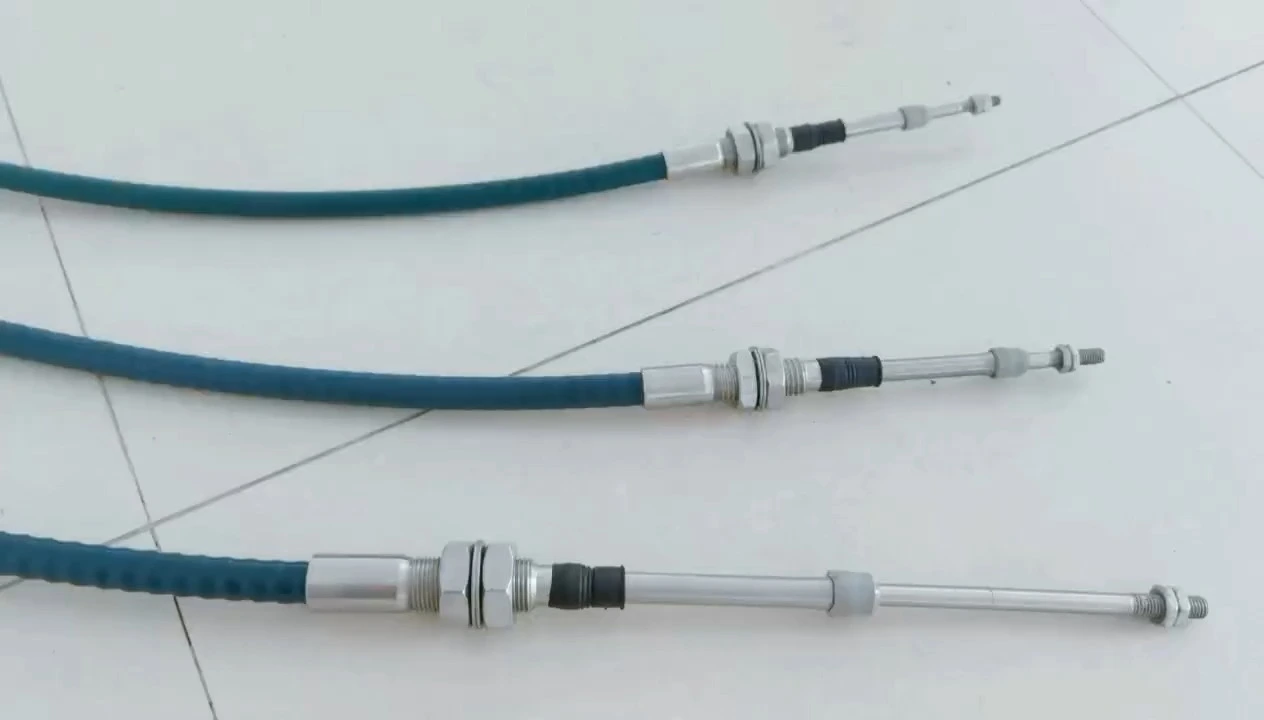
Custom Mechanical Shift Cables Brake Cables Clutch Cables - High Efficiency & Easy Maintenance
Specifications
| Brand: | Phidix |
| Cable Type: | Pull Cable (Single-Direction Control) |
| Operation Type: | Push-Pull Or Pull-Only |
| Load Capacity: | Up to 1200 lb Compression / 3600 lb Tension |
| Cable Sizes: | VLD/LD/MD/HD Series(Or Customizable Per Requirements) |
| Materials: | Various Materials Available Upon Request |
| Inner Member: | Flexible Sliding Wire Rope Or Solid Core |
| Outer Conduit: | PVC,PTFE, PE, Etc |
| End Fittings: | Full Range Available |
| Customization: | Length, Fittings, Load Rating, Materials |
| Installation: | Simple Installation Design |
Applications
● Aircraft control systems
● Throttle control
● Fuel shutoff systems
● Rudder trim control
● Emergency elevator control
● Free fall landing gear
● Emergency vent systems
● Window latch mechanisms
● Flap control systems
● Arresting gear
● Potable water control
● Waste drain control
● Landing gear interlock
● Escape slide actuation
● Slat skew detection
● Tail cone release
● Nose gear down lock indicator
● And many other specialized applications
Features
● Smooth low-friction operation
● High strength and safety design
● Flexible routing capability
● Wide range of load capacities
● Full selection of end fittings
● Custom-built to customer specifications
● Simple to install and easy to maintain
● Long service life under demanding conditions
End Fittings Options
We provide a full range of end fittings, including:
● Threaded rods
● Clevis ends
● Ball joints
● Eyelets
● Bulkhead fittings
● Custom-designed connectors
Product Numbering Rule
Working Principle
Mechanical control cable assemblies operate by transmitting linear motion between two mechanical devices.
● The inner member slides within the outer conduit.
● When push or pull force is applied at the input end, motion is transferred through the inner cable.
● The outer conduit provides structural support and reaction force, ensuring accurate and controlled movement.
● End fittings connect securely to control levers, pedals, actuators, or mechanical linkages.
This mechanism eliminates the need for rigid rods or complex linkage systems, allowing flexible routing and simplified installation.
